Damp
Condensation and mould at home: why it appears and how to really get rid of it
· 6 min
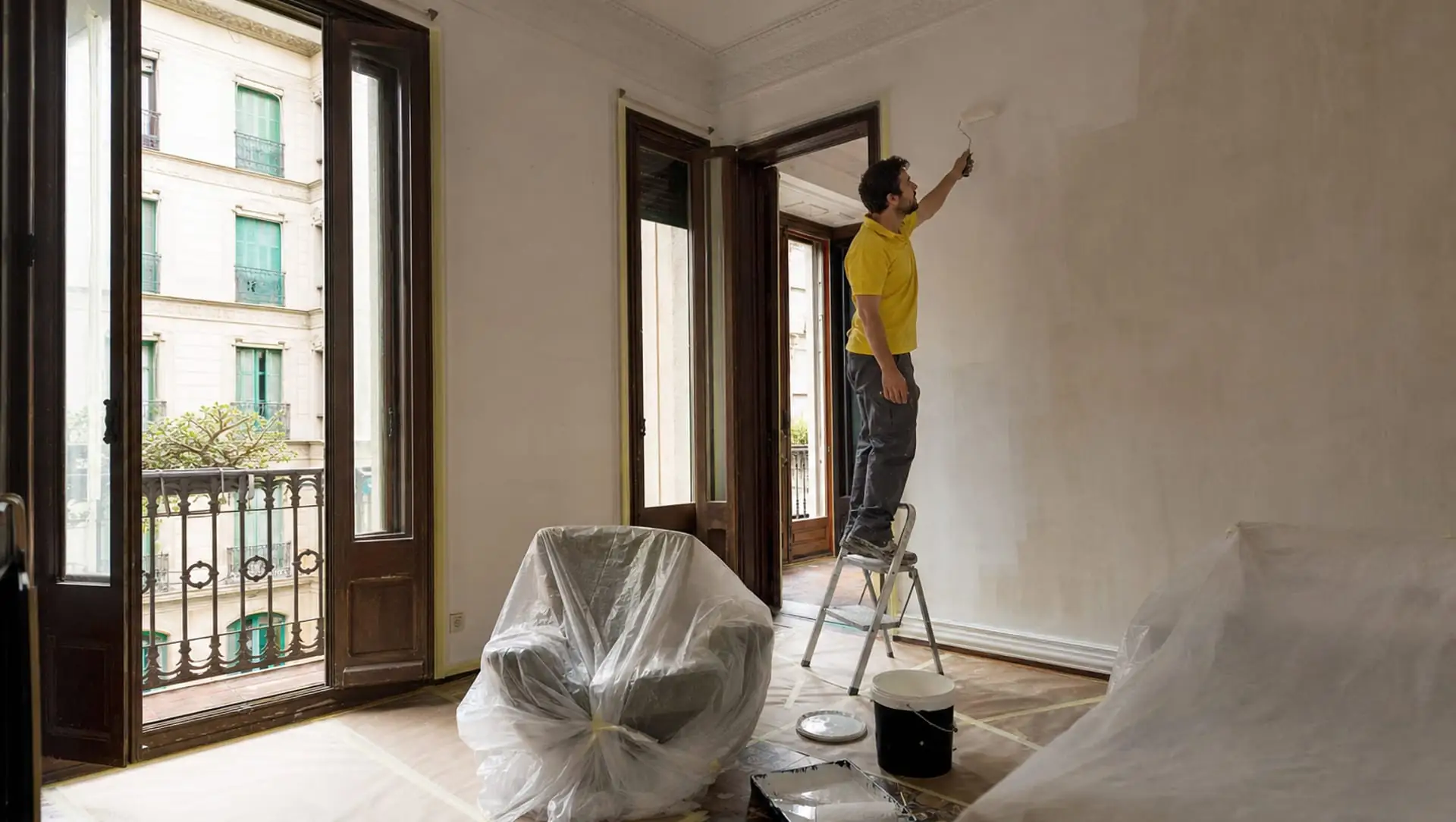
Condensation mould goes for good when three things are combined: cleaning and treating the surface, reducing humidity in the air through ventilation and, where needed, warming the cold wall by insulating the thermal bridge. An anti-mould treatment with cleaning and two coats starts from €10/m²*, but if the flat keeps producing more vapour than it gets rid of, the mould comes back within one or two winters. Painting over it without changing anything else does not work.
What condensation is and why it leads to mould
The air at home carries water vapour: cooking, showering, breathing and drying clothes indoors all add to it. When that air touches a cold surface, the vapour turns into droplets. If the surface stays damp for several days, mould finds what it needs to grow.
That is why condensation mould follows a recognisable pattern: it appears in ceiling corners on external walls, behind wardrobes pushed against the wall, around window frames, on bathroom ceilings and in north-facing bedrooms. It gets worse in winter and better in summer. If the stain is low on a wall with salt deposits, or spreads after rain, it is probably something else: rising damp or water ingress.
The most common causes in Barcelona flats
- Poor ventilation: interior flats facing narrow light wells, common in the Eixample, Sant Antoni or Gràcia, where the air is barely renewed.
- New windows without ventilation: when old frames are replaced with airtight ones, the gaps through which the flat used to breathe unnoticed disappear.
- Thermal bridges: uninsulated slab edges, pillars, roller-shutter boxes and lintels get much colder than the rest of the wall. Typical in 1960s and 1970s blocks in Nou Barris, Sant Martí or Sants, and in many towns across the metropolitan area.
- Drying clothes indoors: a load of washing hung in the living room or a bedroom releases several litres of water into the air.
- Bathrooms without an extractor fan, or with one that does not pull, and kitchens without a hood vented outside.
- Intermittent heating: heating hard for a few hours and leaving the flat cold the rest of the day encourages vapour to condense on the walls.
What you can do starting today
- Ventilate every day for 10 to 15 minutes with a cross-draught, in winter too, ideally after showering and cooking.
- Use the cooker hood and the bathroom fan, and keep the bathroom door shut until the steam has cleared.
- If you have to dry clothes indoors, do it in a room with the window ajar or with a dehumidifier running.
- Move wardrobes and headboards a few centimetres away from external walls.
- Measure relative humidity with an inexpensive hygrometer. If it is often above 60–65 %, the problem is the air, not the paint.
A dehumidifier helps a lot in interior flats, basements or bedrooms that cannot be ventilated well, but it is a patch, not a cure: it treats the symptom while it is on and uses electricity. If you need it all winter, there is a cause worth fixing.
How existing mould is treated
- Protection of floors and furniture, and ventilation of the room during the work.
- Cleaning the surface with a fungicide, without dry scraping, so spores are not stirred up.
- Removing flaking paint or plaster and repairing the substrate.
- Drying and applying an anti-mould primer treatment.
- Two coats of breathable anti-mould paint, so the wall does not hold moisture.
The guide price depends on the square metres, the condition of the substrate and whether anything else needs correcting:
| Work | Guide price |
|---|---|
| Damp survey with readings and report | from €80* |
| Mould treatment and anti-mould paint, cleaning and two coats | from €10/m²* |
| Painting the remaining walls and ceilings, two coats | from €8/m²* |
| Trickle vents, extractor fan or mechanical ventilation | price after visit* |
| Insulating a wall or a thermal bridge | price after visit* |
*Guide prices. You receive the final amount in writing, itemised, after we have seen the flat.
When insulation is the real fix
If you ventilate, do not dry clothes indoors, the relative humidity is reasonable and the mould still comes back in the same corner, the problem is a wall that is too cold. The fix then is to insulate that spot: an internal lining with insulation and plasterboard on the external wall, insulating the roller-shutter box, or replacing the window with a thermally broken one with built-in ventilation. For whole buildings, external wall insulation is the most effective option, but it is a decision for the owners’ association and usually needs a technical project and a licence.
An internal lining takes a few centimetres off the room and means moving sockets and radiators, so it makes most sense if you are already renovating or painting. If you are planning a renovation, that is the time to sort out ventilation and thermal bridges rather than cover them up.
Mould and health: a sensible view
There is no need to panic, but no reason to live with it either. General health guidance agrees on avoiding persistent damp and mould at home, all the more so with children, older people or anyone with allergies or asthma in the household. For any symptoms, see your doctor. What is in your hands is not letting it spread: a small patch treated early is an afternoon’s work; a whole wall behind a wardrobe is a good deal more.
If you have mould that comes back every winter, send us photos of the affected areas and tell us which way the flat faces. We reply within 24 working hours, come and take readings and give you in writing what is causing it, the treatment we propose and, if needed, which change in ventilation or insulation would prevent it, with each item listed separately.
Frequently asked questions
Questions on this topic
Because they are the coldest, least ventilated spots in the room. Water vapour in the air condenses on those cold surfaces, and mould grows where the wall stays damp. Moving furniture a few centimetres away from the wall and ventilating every day helps a lot.
Mould treatment with anti-mould paint starts from €10/m²*, including cleaning and two coats. If ventilation also needs correcting or a thermal bridge needs insulating, those items are quoted separately after the visit.
It can whiten the stain, but it does not address the cause, and on porous surfaces the mould tends to return. The right way is to clean with a fungicide, let it dry, apply anti-mould paint and, above all, reduce the humidity in the air.
They can contribute. When old windows are replaced with airtight ones, the flat no longer ventilates through the gaps and indoor humidity rises. That is why it is worth ventilating daily or fitting trickle vents or mechanical ventilation.
Health authorities advise against living with persistent damp and mould, especially if anyone at home has allergies, asthma or breathing problems. If you have symptoms, see your doctor; at home, the sensible thing is to treat it early so it does not spread.