Damp
Damp on a wall: how to tell rising damp, condensation and leaks apart
· 6 min
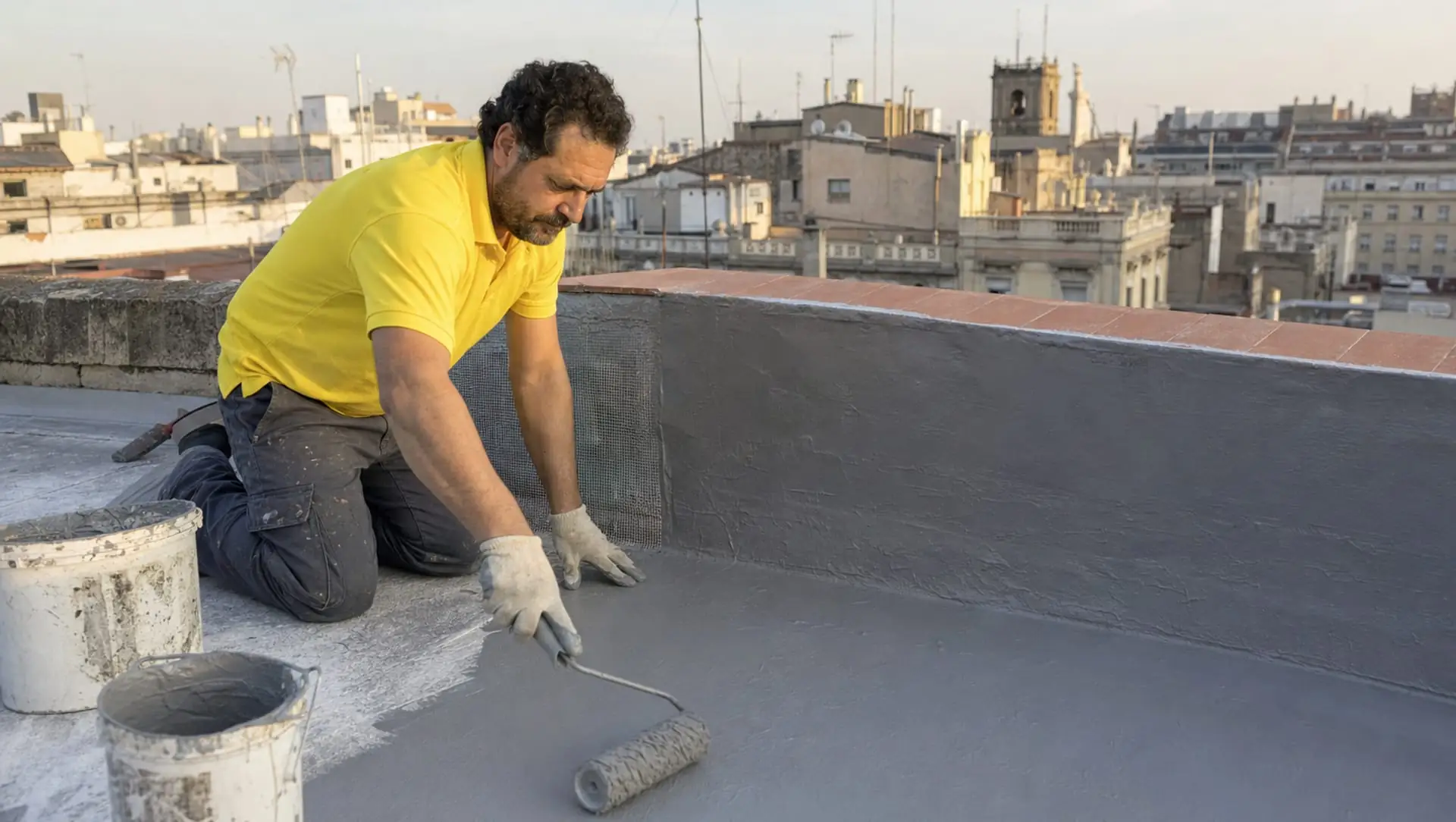
Where damp on a wall comes from is worked out mainly from three clues: how high it is, when it gets worse and what it looks like. If it is low on the wall, with salt deposits and all year round, it is usually rising damp; if it appears in cold corners and behind furniture in winter, condensation; if it grows after rain next to the façade or ceiling, rain penetration; and if it does not change with the weather and is near a bathroom or kitchen, probably a leaking pipe. Confirm it with measurements before treating it, because each cause has a different fix.
The four causes at a glance
| Cause | Where it appears | When it gets worse | Typical sign |
|---|---|---|---|
| Rising damp | low on the wall, up to about 1 m | all year, more in wet periods | salt deposits and blistering paint |
| Condensation | corners, behind furniture, windows | winter and mornings | black spots of mould |
| Rain penetration | next to the façade, ceiling below a terrace | hours or days after rain | stain with a tide mark |
| Pipe leak | near bathrooms, kitchen or risers | constant, unrelated to the weather | stain that grows and never dries |
Rising damp: water from the ground
It is typical of ground floors, shops and basements, and very common in old buildings in Gràcia, Sants, Poble-sec or Ciutat Vella, built without a damp-proof course. The wall soaks up groundwater like a sponge and leaves salts on the surface as it evaporates.
- A horizontal band of staining along the lower part of the wall.
- Salt deposits (salitre): white powder or crusts, blistering paint and crumbling plaster.
- Skirting boards coming away and a damp smell on the ground floor.
- Present all year, though more noticeable in autumn and winter.
Condensation: water from the air itself
No water comes in from outside: it is the steam from showers, cooking, laundry dried indoors and breathing, which condenses when it touches a cold surface. That is why it appears on outside walls, at thermal bridges and in corners where air does not circulate.
- Ceiling corners on walls facing the street or the courtyard.
- Behind wardrobes, headboards and sofas pushed against the wall.
- Around windows and in bathrooms without an extractor fan.
- Worse in winter, in the morning, and when windows mist up.
- Spots of black mould that spread if the room is not ventilated.
Rain penetration: rainwater getting in
Water gets in through the façade, the roof, a badly waterproofed terrace, a balcony or a window joint. The key sign is the link with rain: the stain grows a few hours or days after rain and shrinks in dry weather. It is most common in penthouses in Sant Martí or Poblenou with a terrace above, in top-floor flats under the roof and on façades exposed to driving rain. It usually leaves an irregular stain with a darker ring around it.
Pipe leak: constant and close to water
A pipe leaking inside a wall or floor produces a stain that does not depend on the weather or season and never quite dries. It appears near bathrooms, kitchens, water heaters or risers, sometimes on the ceiling if the leak is from the flat above. It is more likely in old buildings with ageing lead or iron pipes.
Checks you can do yourself
- Aluminium foil test: tape a square of about 30 by 30 cm to the wall, seal the edges and wait 24 to 48 hours. Water on the outside means condensation; moisture on the wall side means the water is coming from the wall.
- Water meter test: turn off every tap and appliance that uses water and see if the meter keeps turning. If it moves, there is a leak in your plumbing.
- Hygrometer: an inexpensive indoor humidity meter. If humidity stays high inside the flat, especially in winter, condensation becomes more likely.
- Rain diary: note for a few weeks whether the stain grows after rain. If it does, think rain penetration.
- Dated photos: photograph the stain from the same spot every week to see whether it is spreading.
These checks point you in the right direction but do not replace measurement. Many homes have two causes at once, for example rising damp on the ground floor and condensation in the bedroom, and they need to be told apart.
Why painting over it does not solve it
Paint, even anti-damp paint, only works on the surface. If water keeps reaching the wall, from the ground, through a crack or from a pipe, it finds a way out: the paint blisters, the salts push from inside and the stain returns, sometimes larger or a little higher. A very sealed paint on an old wall that needs to breathe can also make rising damp worse. The right order is to find the cause, fix it, let the wall dry and only then prepare and paint.
Diagnosis and indicative prices
| Service | Indicative price |
|---|---|
| Damp diagnosis with readings and photo report | from €80* |
| Mould treatment and anti-mould paint | from €10/m²* |
| Terrace waterproofing with liquid membrane | from €45/m²* |
| Waterproofing with new paving | from €90/m²* |
*Indicative prices. The treatment is quoted in writing after the diagnosis, once it is clear what is causing the damp.
During the diagnosis visit we take moisture readings at several points and heights on the wall, check the façade, terrace, ventilation and nearby pipework, and give you a report with photos, the likely cause and the fix we propose. The report is also useful if you need to talk to the property manager, a neighbour or your insurer.
If you have a stain that keeps coming back, send us a few photos and tell us where it is and when it gets worse. We reply within 24 working hours, come to take readings and tell you what is causing it before quoting anything. We work across Barcelona and the metropolitan area, from Horta to L'Hospitalet and from Badalona to Cornellà.
Frequently asked questions
Questions on this topic
Condensation appears in the coldest spots: corners, behind furniture against outside walls, around windows and in bathrooms without ventilation, mostly in winter and in the morning. It usually comes with black spots of mould. The aluminium foil test helps confirm it.
Tape a piece of aluminium foil about 30 by 30 cm to the wall, sealing the edges well, and leave it for 24 to 48 hours. If water appears on the side facing the room, the cause is condensation; if moisture shows on the side against the wall, the water is coming from the wall itself.
White stains and blistering paint low on the wall, on ground floors or in basements, usually point to rising damp: groundwater climbing up the wall and leaving salts as it evaporates. It is worth measuring before choosing a treatment.
It works as a finish once the cause has been fixed, or as support in mild cases of condensation. If water keeps getting in or rising through the wall, the stain comes back, sometimes bigger.
At KONSTRUKT a diagnosis costs from €80*: a visit, moisture readings at several points and heights, and a report with photos and the likely cause. The repair is decided and quoted on the basis of that report.
It depends on the source. If it comes from a neighbour's private pipe, they or their insurer usually answer for it; if it comes from the façade, roof or shared downpipes, the community does. A report with photos and readings makes the claim to the insurer or the property manager easier.