Renovations
10% VAT on home renovations in Spain: requirements and when it doesn’t apply
· 7 min
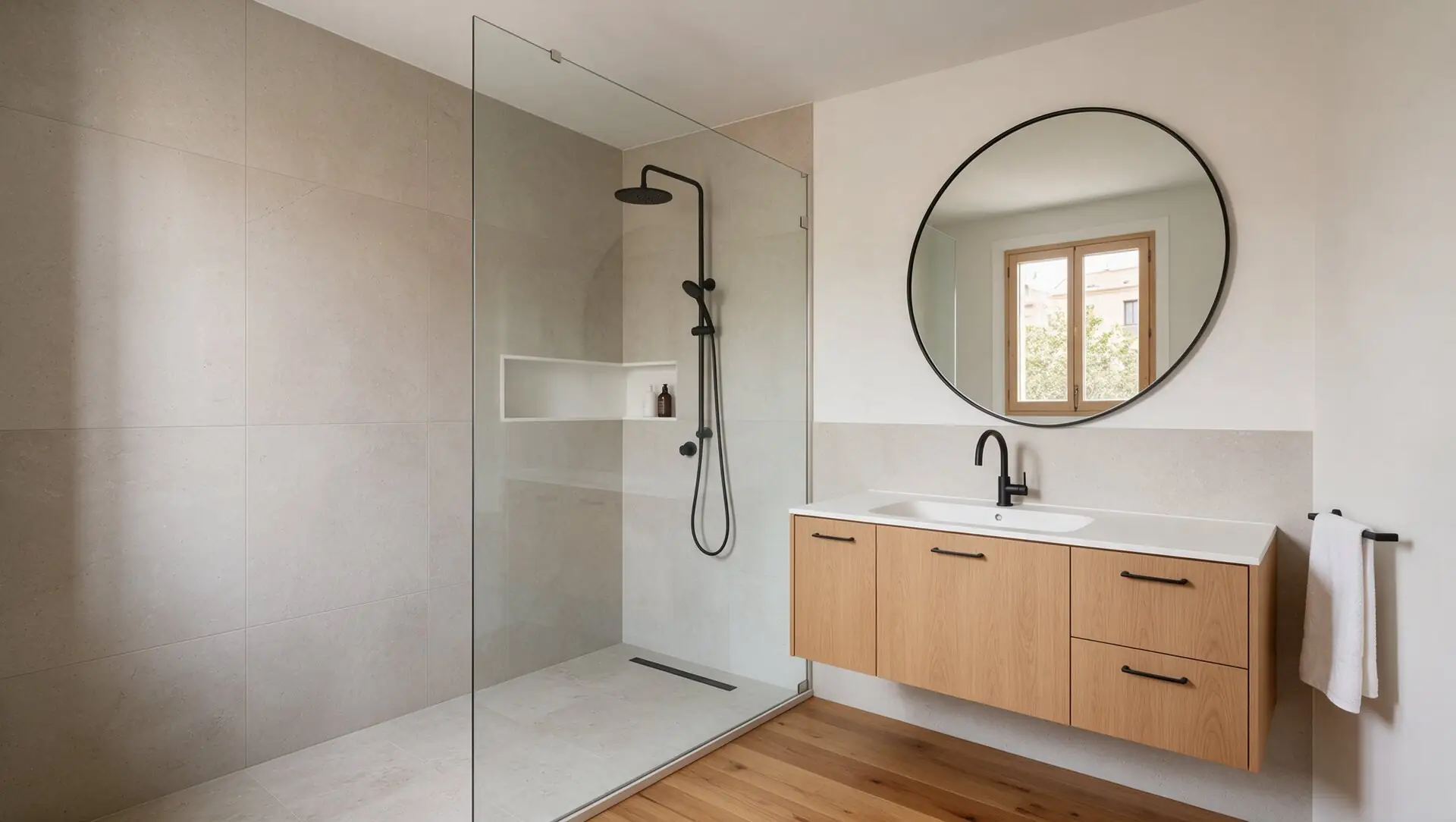
A home renovation in Spain can be invoiced at 10% IVA (VAT) instead of 21% if three conditions are met: the client is a private individual (or an owners’ association) and the home is used privately as a dwelling; it was built or last rehabilitated at least 2 years before the work starts; and the materials supplied by the contractor do not exceed 40% of the taxable base. If any of the three fails, the work goes at 21%. The rule comes from the Spanish VAT Act, and you should confirm your case with your gestor (tax adviser) or the Agència Tributària.
The requirements, one by one
- Who commissions the work: an individual not acting as a business or professional, or an owners’ association for work on the residential building. If a company contracts the work, it generally does not apply.
- What the home is used for: private use as a dwelling. What matters is the actual use, not only that the property is registered as a home.
- Age: construction or the last rehabilitation of the building or home finished at least 2 years before the work begins. In buildings in the Eixample, Gràcia or Sant Antoni this is hardly ever an issue; in a newly delivered flat it is.
- Materials: the cost of materials supplied by the contractor does not exceed 40% of the taxable base of the work.
The 40% rule in numbers
The 40% is measured against the taxable base, meaning the total price of the work before VAT, not against labour. Here are two versions of the same bathroom renovation with a base of €10,000:
| Item | Case A | Case B |
|---|---|---|
| Labour | €6,500 | €5,000 |
| Materials supplied by the contractor | €3,500 | €5,000 |
| Taxable base | €10,000 | €10,000 |
| Share of materials | 35% | 50% |
| VAT rate | 10% | 21% |
| VAT | €1,000 | €2,100 |
| Total incl. VAT | €11,000 | €12,100 |
An illustrative example with round figures, not a quote. In case A materials make up 35%, below the limit, and the whole job goes at 10%. In case B they make up 50% and the whole job moves to 21%: the rates are not split between parts. In this example the difference is €1,100.
That is why the quote should clearly separate labour and materials. If a renovation is close to the limit, buying part of the material yourself, such as sanitaryware or flooring, can sometimes change the outcome. But it only makes sense if the saving is worth it: material you buy yourself is paid for in the shop with its own VAT.
Where it usually applies and where it doesn’t
Common situations where, if the requirements are met, 10% usually applies:
- A bathroom or kitchen renovation in the flat you live in, in Sants, Horta or Nou Barris, in a building more than 2 years old.
- A full renovation of an old flat you have bought to live in.
- Painting, new floors or upgraded installations in your main home.
- Work on communal elements commissioned by the owners’ association of a residential building, such as the staircase or the façade.
And situations where it normally doesn’t apply, or where you should ask first:
- Shop, office or professional practice: not a home in private use, so usually 21%.
- The work is contracted by a company or self-employed person for their business.
- A new home, or one rehabilitated less than 2 years ago.
- Renovations where the materials supplied exceed 40% of the base.
- Flats that are rented out or used for a business: the owner may be acting as a business and the treatment changes. Ask your gestor.
On second homes: the rule refers to private use as a dwelling by an individual, not to it being your main residence. A second home used by you or your family may qualify, but if you let it to third parties or run it as a tourist flat the situation changes. This is a point worth checking in advance.
The declaration you sign
To apply 10%, the contractor needs to justify that the conditions are met. Usually the client signs a written declaration stating that they are a private individual, that the home is used as their dwelling and that its construction or last rehabilitation is at least 2 years old. The contractor keeps it with the invoice. Only sign if the details are true: if they aren’t, the Agència Tributària can adjust the VAT applied, and responsibility falls on whoever made the declaration.
Note too that some items that are not incorporated into the work, such as certain appliances or free-standing furniture, may be treated as a separate sale at 21%. If your kitchen renovation includes appliances, ask before you finalise the quote.
21% and other rates
21% is the standard rate and applies when the 10% requirements are not met. Other reduced rates exist for very specific cases that are not an ordinary home renovation; if you think your case is special, ask your gestor.
How we handle it in the quote
- Visit and measurement of the job.
- Written quote with labour and materials as separate items.
- Calculation of the share of materials in the taxable base.
- The expected VAT rate and the declaration you would need to sign.
- Invoice with the rate applied and the declaration on file.
If you are thinking of renovating your flat in Barcelona or the metropolitan area, from Poblenou to Sarrià or from Badalona to Cornellà, tell us what you have in mind. We reply within 24 working hours, come to see it and send you a written, itemised quote with the VAT we believe applies. For the final word on the rate, your gestor or the Agència Tributària is the reference.
Frequently asked questions
Questions on this topic
Broadly, three: the client is a private individual not acting as a business, or an owners’ association; the home is used privately as a dwelling and was built or last rehabilitated at least 2 years earlier; and the materials supplied by the contractor do not exceed 40% of the taxable base. Confirm your case with your gestor (tax adviser) or the Agència Tributària.
If the materials supplied by the contractor exceed 40% of the taxable base, the reduced rate does not apply and the work is invoiced at 21%. That is why it is worth checking the split between labour and materials in the quote before you sign.
In principle, no. The reduced rate is meant for homes used privately as dwellings. A shop, office or professional practice is usually invoiced at 21%. If you plan to convert commercial premises into a home, check the case with your gestor before assuming either rate.
Materials you buy yourself are not part of the contractor’s invoice: you pay for them in the shop with their own VAT, normally 21%. The contractor’s invoice will include only labour and the materials it supplies. Bear in mind that if you supply the material, its guarantee is the seller’s.
Usually the client signs a written declaration stating that they meet the requirements: that they are a private individual, that the home is used as their dwelling and that it is old enough. The contractor keeps it to justify the rate applied. Only sign what is true, because you are responsible for that information.